


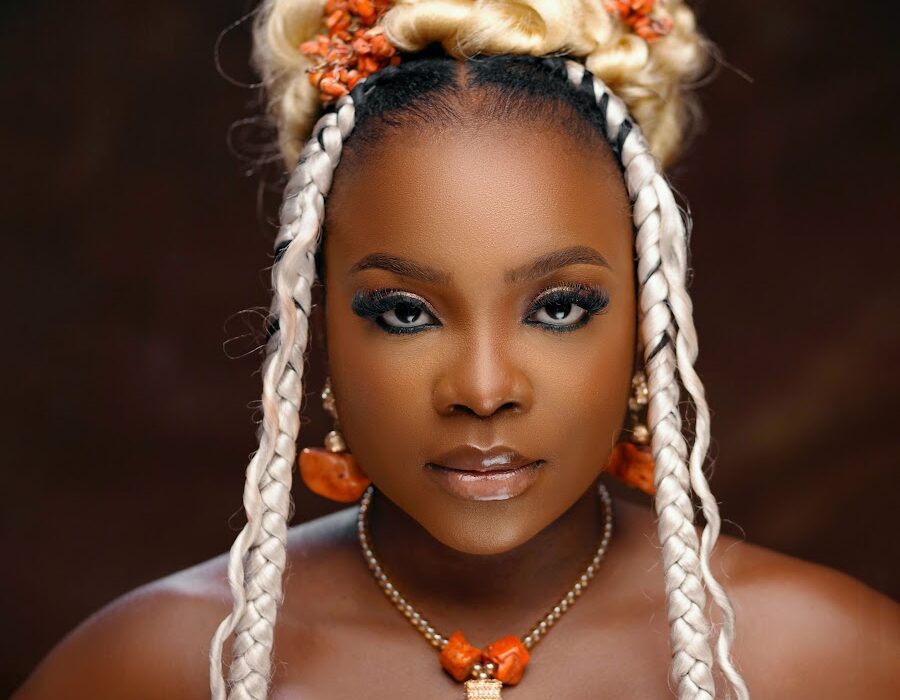
When “Achalugo” started making the rounds, it would have been easy to dismiss it as another regional anthem having its moment ,a catchy, culture-rich record from the Southeast that rode social media waves into national recognition. We have seen that pattern before. But reducing Ugoccie to a viral moment would be a critical misread.
When Ugoccie speaks about “Achalugo,” she does not describe it as a lucky accident or a studio moment that simply caught fire. She describes it as design.
“No, it was well thought out,” she says plainly. “I have always been somebody who makes intentional music.” By intentional, she means rooted. Rooted in the responsibility of representation. For her, the balance people hear in “Achalugo”, that seamless blend of traditional Igbo texture and contemporary production, was not coincidence. “I have always looked for a way to make the music that I do be very rooted in my culture. I still want to make it contemporary at the same time because, at the end of the day, we have to evolve.”
That evolution, however, almost came at a cost.
When she began making music commercially in 2019, the pressure to dilute her Igbo foundation was real. “The industry kept saying, ‘They are not going to excel if you are just going to keep singing in Igbo.’” For a moment, she considered listening. The fear of being boxed in regionally is one many artists quietly carry. But Ugoccie found clarity in history. “The likes of women like Onyeka Onwenu exported the language outside the shores of Nigeria and they sold out spaces,” she says. “Nobody can tell me that my music cannot be exported because I have already done it.”
That conviction is not theoretical. She had successful shows in Europe and the United States singing primarily in Igbo. For her, the idea that language limits reach is simply outdated. “Hell no. It can never be,” she says when asked whether language is a barrier to global success. “The biggest songs in the world are songs that were done in other languages… The beauty is in the melody, it is in the rhythm. The language should be the least of anybody’s worries.”
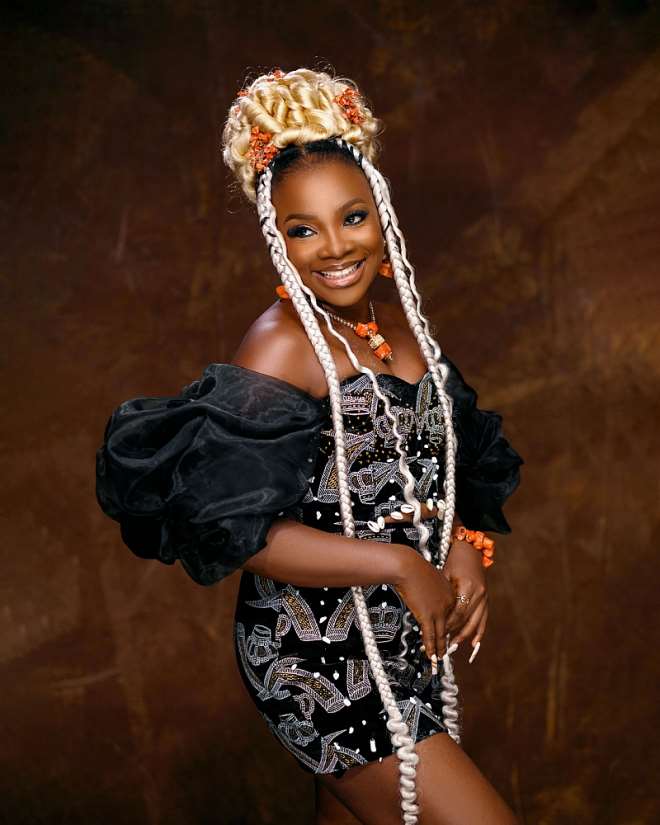
Her relationship with Igbo is not stylistic. It is lived. Born in Abia State, educated there, and later working as an on-air personality in Anambra, her voice travelled across Imo and Enugu through radio. “I traveled to basically all the states in the southeast and was able to equip myself with every single one of their dialects,” she explains. That immersion now allows her to weave dialects into her music so fluidly that listeners debate her origin. “Some people think I am from Enugu, some say Abia, some say Imo. I like it that way because, at the end of the day, we are just one.”
It is this unapologetic rootedness that positions her within a broader cultural shift. Ugoccie sees herself as part of a generation of Southeastern artists refusing to shrink their identity. “If we are talking about a generation of people that inspired artists from the southeast to be fearless, you cannot mention them without mentioning Ugoccie,” she says confidently. “There are people like us that have come out as a fresh cup to tell other people, ‘You know what, go ahead. It’s not stopping any time, and this fire is not burning out.’”
Confidence, however, does not mean ease.
When asked about the challenges of navigating a male-dominated industry, she does not begin with gender politics. She begins with money. “My biggest challenge is finance; every other thing is secondary.” Music today demands capital ,for promotion, content production, visibility. “To do music promotion, you need money; to shoot your content, you need money. So now you have to work two times.” She speaks candidly about juggling side gigs, supporting her father and siblings, and funding her music alongside her manager, whom she calls her “solid rock.”
Still, there have been moments when gender bias was impossible to ignore. She recounts overhearing a booking negotiation where a male artist with less momentum was offered significantly more. When her lower fee was questioned by her manager , the justification was simple: she is a woman. “It felt disrespectful,” she says. “When it comes to talent, what is good for the goose is good for the gander.” They walked away from the deal.
In rooms where intimidation is subtle but present, she has learned to adjust. “I used to be like the timid person in the room, and then I realized that it was not working,” she admits. “These people want to see boldness; they want you to be fearless.” Yet there is a quiet vulnerability beneath that armor. “Deep down, I am a very soft person, but the world does not like soft.” The performance of boldness, for her, is sometimes survival.
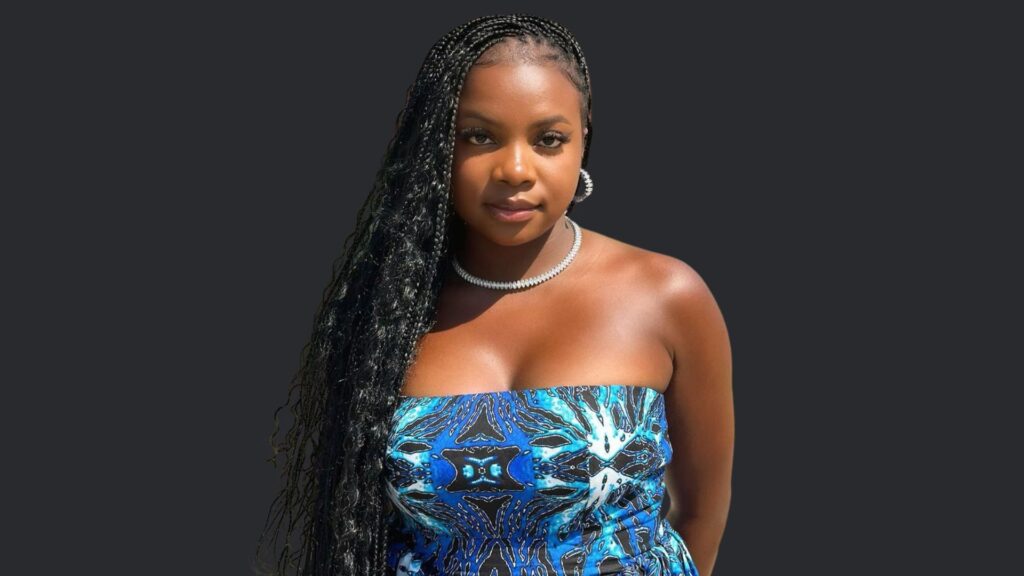
The myth of overnight success is another narrative she dismantles. Before her first viral moment, there were years of obscurity. “Prior to the first time I had my first viral video, I had already been constantly putting out covers from way back. I had made music that I financed with my own money that didn’t go anywhere.” The breakthrough, she insists, was consistency. Social media democratized access, yes , but it did not eliminate the grind. “Where it becomes a task is once you get that commercial song. Now you have to amp it up… Now there is pressure.”
She is clear-eyed about the economics of the industry and equally clear that money cannot be the sole motivation. “There is no way that a song that got five million streams on Spotify is going to give you money to buy a car,” she says, cutting through the illusion that streams automatically translate to wealth. Viral attention, without structure and long-term planning, can easily become emotional pressure rather than financial freedom. For Ugoccie, sustainability matters more than spectacle.
Structure is something she also emphasizes strongly, especially for emerging artists. “Industry friends are not your friends,” she says without malice. “Keep it work-friendly.” She advises artists to save aggressively when money comes in, build small teams early, and establish professional systems ; even something as simple as a visible email address. “The moment you have made up your mind… put the structure down so that when opportunity eventually comes, it is going to meet you ready and prepared.”
Behind the scenes, investing in her brand looks less glamorous than people assume. “There are a lot of filled notebooks,” she says. “I am always racking my brain… thinking of the next creative content to put out.” And just as importantly, she prioritizes rest. “If you don’t take time to wash the glass where the wine comes out of, eventually you are going to start serving sour wine to people.”
Despite the pressures, she carries a clear vision. In five years, she wants one title stamped unmistakably: “Voice of the East. Beacon.” She wants to be remembered as the artist who “funkyfied” the Igbo language who made it sound melodious, exportable, undeniable. “In five years, they will be calling me a legend,” she says, not boastfully, but matter-of-factly.
Yet her ambitions stretch beyond charts and recognition. She speaks passionately about returning home to establish workshops and infrastructure for young girls, especially creatives unsure of how to channel their talent. “I have a lot I want to do for young girls back home,” she says. “It just needs a little time and a little shaping.”
And when the story of Ugoccie is eventually told in full, she hopes it will not only be about streams or stages. “I want people to know me as someone who infused her personality into her music,” she reflects. “When you listen to my music, you can have a picture of who this person is.” She wants her warmth to radiate through her sound ,a reflection of a childhood filled with love and parental support. “I have a BSc in Biology but am doing music because my parents saw my dreams and supported them.”
In many ways, that support and love echoes through everything she creates. The boldness. The softness beneath it. The insistence on language. The refusal to dilute.
Ugoccie is not simply building a catalogue of songs. She is building cultural memory, one melody, one dialect, one intentional decision at a time.