

For a long time, when Africa’s creative future was discussed, certain cities entered the conversation almost automatically. Lagos carried the energy of music and cultural export. Johannesburg often represented fashion, television, and visual culture. Nairobi appeared through technology and digital innovation.
Kigali was rarely the city that people mentioned first.
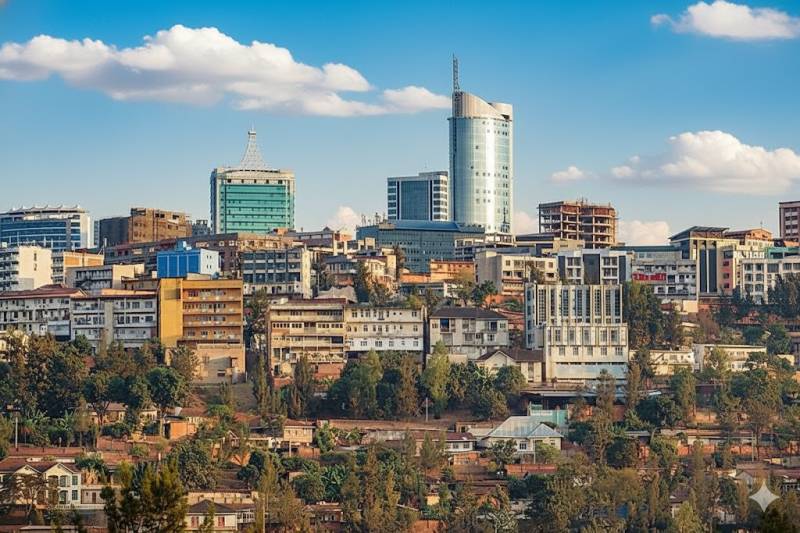
Not because creativity was absent there, but because Kigali has grown differently from the continent’s louder cultural capitals. Its presence has been gradual, built with less noise and more intention. Yet that quietness is precisely why the city is beginning to attract more serious attention.
What is taking shape in Kigali is not simply a creative scene trying to catch up with older cultural centres. It is a city increasingly aware that creativity can no longer sit at the edges of economic thinking.
That awareness came into sharper view during the recent Africa Creative Economy Lens, where creatives, investors, policymakers, and development institutions gathered to talk less about talent itself and more about what is required to make that talent sustainable.
What stayed with people after the gathering wasn’t the usual chatter about who was in the room. It was the shift in conversation. Nobody needed convincing that African talent exists that much has never been in doubt. The real talk kept circling back to tougher terrain: where does large-scale funding for creative work come from, what policies genuinely protect creative livelihoods, and how do cities move beyond treating culture as a moment and start embedding it into systems that last.
One idea kept surfacing across those conversations: creativity can no longer be treated as something separate from economics. Across the continent, it is increasingly being understood as serious ground for jobs, investment, and long-term growth.
That shift matters because in Africa, creativity has never really been in question. It’s always been there, flowing, evolving, finding a way; The harder part and the part still catching up are the systems needed to sustain it.
A musician may break through. A filmmaker may gain international attention. A designer may suddenly find visibility beyond local markets. But without structure, those moments often remain fragile.
Kigali seems to understand that gap quite clearly.
And outside the formal sessions, the city itself quietly reinforced that point. During the same period, exhibitions, screenings, live performances, cultural showcases, and creative gatherings moved across different parts of the city, creating the sense that creativity in Kigali is not living only inside conference halls or policy language. It is increasingly becoming part of how the city wants to be experienced.
What becomes obvious after spending time around that energy is that Kigali is not leaving creative growth to chance.
That intention can already be seen in spaces like Inema Arts Center, which has become one of the city’s most recognizable creative spaces. Founded by local artists, it has grown into more than an art centre. It is a place where visual artists, performers, young creatives, and visiting audiences regularly meet in ways that allow ideas to move across disciplines.
What makes spaces like Inema matter is not only the art on the walls, but the consistency they offer in a continent where many creative spaces struggle to survive long enough to shape real communities.
That consistency is closely tied to people like Emmanuel Nkuranga and Innocent Nkurunziza, whose work has helped give Kigali one of its clearest artistic identities. Their influence extends beyond exhibitions. Through mentorship, workshops, and the daily act of keeping a creative space alive, they have helped younger artists see that artistic practice can be sustained, not just admired from a distance.
Music is also quietly strengthening Kigali’s creative confidence. Artists like Bruce Melodie and Meddy have helped push Rwandan sound beyond national borders, giving the country wider cultural visibility and showing that Kigali’s creative future will not be built through one discipline alone. The city’s creative identity is increasingly shaped by how these different sectors begin to reinforce one another.
The same thinking appears in Kigali’s broader physical development.
BK Arena, for example, signals more than a modern event venue. It reflects a city preparing itself to host cultural moments at a larger scale; concerts, festivals, creative gatherings, and international events capable of drawing wider attention.
Then there is Kigali Innovation City, which suggests that Rwanda understands something many cities are only beginning to confront: the future of creativity and the future of technology are now deeply connected.
At this point, that connection is difficult to ignore. Animation, gaming, digital storytelling, design, content production, and virtual media all now live in that shared space between creative imagination and technological infrastructure.
For African cities thinking seriously about the future, that overlap matters enormously.
Because creative influence today is no longer built only through traditional art forms. It is also shaped by who builds digital platforms, who creates exportable visual culture, who controls production systems, and who understands how cultural identity can travel through new formats.
Kigali appears to be building with that awareness already in mind.
Film is also becoming part of that wider story. Through platforms like the Rwanda Film Festival, local storytelling has gained increasing visibility while opening space for wider conversations around how Rwandan stories are told and circulated.
Fashion, too, is beginning to occupy more space, especially through younger designers whose work often reflects both local identity and international clarity.
What Kigali may still lack in size, it seems determined to make up for through structure.
That may ultimately become one of its strongest advantages.
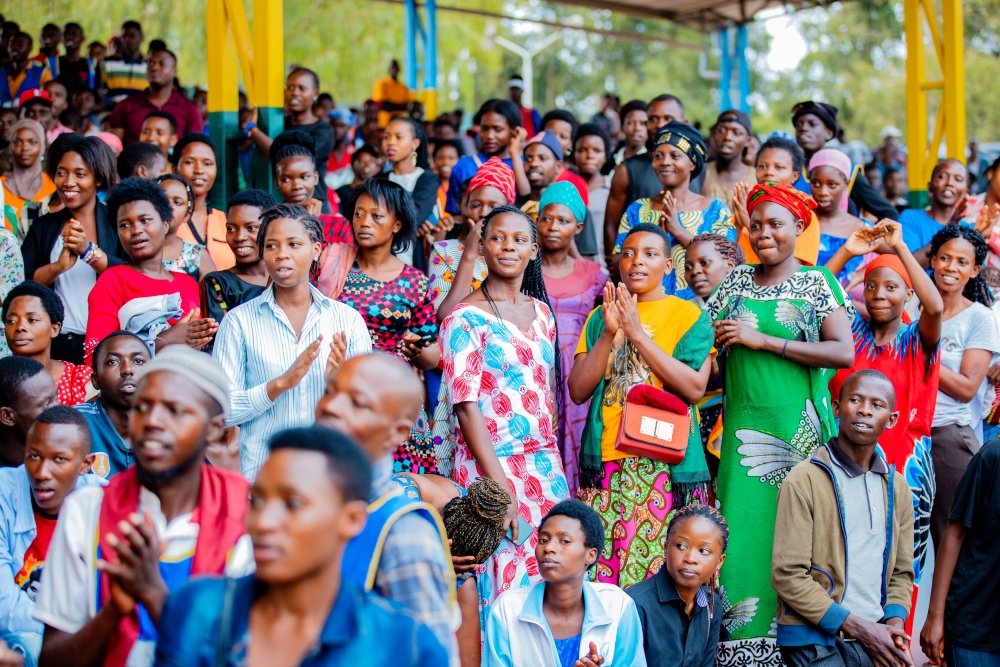
Unlike larger African cities where creative growth often emerges through improvisation and urban disorder, Kigali’s smaller scale allows connections to happen differently. Policy conversations, creative events, artistic spaces, and business discussions feel closer to one another, less scattered, easier to build around.
That does not mean the city has solved the larger questions that affect creative industries everywhere. Funding remains difficult, access remains uneven, and many creators still face the familiar challenge of building sustainable work inside young ecosystems.
But Kigali is increasingly showing that creative growth becomes more credible when a city begins treating culture as something worth planning around.
That is perhaps why international attention toward the city continues to deepen.
At the Africa Creative Economy Lens, one message returned repeatedly;Africa’s creative industries are no longer peripheral to development conversations. They are becoming central to how the continent imagines jobs, exports, youth opportunity, and global influence.
Cities that understand that early will likely shape what comes next.
Kigali may still be younger than many of Africa’s larger creative capitals, but it is beginning to do something important: building an environment where creativity is not treated as decoration, but as part of infrastructure.
And that may matter more in the long run than it first seems.