
Backing an Edo-language Epic when the Market Said No
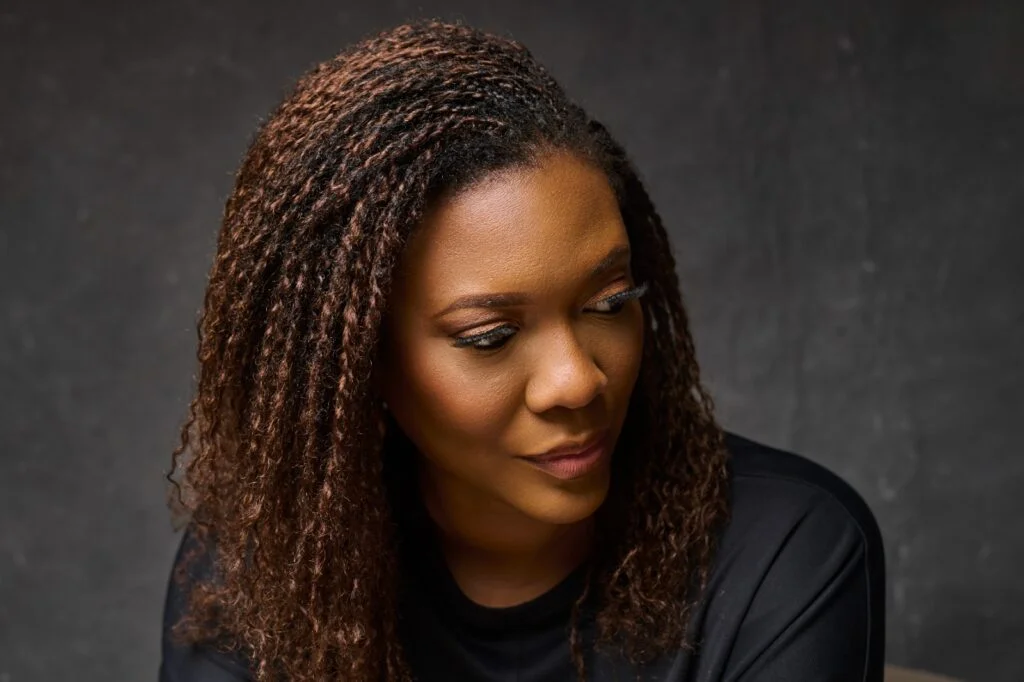
Before the boardrooms, the capital markets and the film premieres, there was a young skinny Edo girl in Kaduna who loved to roll up her sleeves and keep up with four older brothers. Lilian Olubi still carries that energy, the quiet fearlessness, the readiness to stand her ground, the comfort of being in male-dominated spaces without ever questioning whether she belonged there. “I was never made to feel less because I was a girl,” she says. That confidence was seeded early, a devoted father who did not hide his affection, and a tough but loving mother determined not to raise a fragile daughter. Comfort and strength learning to coexist.
Lilian did not grow up with a perfectly crafted career dream. Whilst classmates in secondary school already had their futures mapped as doctors or engineers, she had no idea what she wanted, and for years, that uncertainty made her anxious. Business Administration became a safe answer. However, her final year at the University of Benin, practicality nudged her towards purpose. Lilian’s father worked in finance, so choosing the capital market as her thesis topic seemed like the easiest path to data and interviews. Unknown to her, that simple decision sparked a fire. Watching the movement on the stock exchange trading floor; the urgency, the thrill of risk and reward, she found clarity. “I think this is it,” she remembers telling herself. “I want to be a stockbroker.”
So, she ran with it, and ran hard. She became one of the few female stockbrokers in Nigeria, and eventually CEO of EFG Hermes Nigeria, a business she initially co-founded and later sold to the eponymous global financial institution. She continuously navigated powerful spaces where she often was the only woman at the table. Not for once did she walk in seeking permission. She was prepared, she was competent, just as she had been raised to hold her own. Instead of proving she deserved to be there, she simply exuded the aura of one who deserved.

But, destiny is rarely a straight line; it often loops through the places you needed to be, before reaching where you were called to stay. As the years passed and her career grew, a restlessness began to tug at her heart, not a dissatisfaction with success, but a whisper that there was more. She had always possessed an artistic spirit: writing, imagining, expressing.
In 2019, during a quiet moment of prayer, she received a vision that would change everything. A story. A name. A powerful image of a woman connected to history, to purpose, and to legacy. It felt divine, like a download straight from heaven; OSAMEDE. “This one came differently,” she says, “And it wouldn’t let go”. She honored the idea the way it first came: as a stage play. Twelve live performances, two years in a row. The audience’s response proved the story had weight. But the story itself kept stretching, demanding more space than the stage could contain. It wasn’t just a play. It was a world. It was a cinematic epic waiting to be born.
Choosing to make Osamede a film was already bold. Choosing to make it an Edo-language epic was fearless. Nollywood has long celebrated Yoruba, Igbo, and Hausa language cinema, but Edo stories haven’t been given the same grand, mainstream platform. Investors worried. Industry voices advised caution. But Lilian was persuaded in her spirit. She believed the South-South deserved to see themselves as royalty, warriors, and leaders, not side characters in other people’s histories. She believed authenticity would resonate far beyond Benin. The Edo people had earned their own epic.
With prayer guiding her decisions, she went searching for a Director and found one in the most unexpected way: not an Edo filmmaker, but someone who understood the heart of the story. And in a twist that still amuses her, he became the one who insisted on 100% indigenous language. No switching to English “for wider appeal.” If this story was going to honor a people, her people, then their language, their identity, had to sit at the center. The cast learned Edo, the culture carried the script, and a new kind of South-South epic was born.

When Osamede premiered at Cannes, Lilian found herself standing at the back of the room, watching the audience instead of the screen. African Americans leaned forward as if they had found home, Brazilians connected with ancestry, Europeans asked curious questions and nobody left the room. When the lights came up, someone asked Lilian if she saw herself in Osamede. She tried to form an answer, but tears did the job for her. Because yes, she sees herself in the courage, in the resistance, and in the calling to show up for something bigger than comfort.
Box office numbers in Nigeria may not tell the full story, but the film’s journey has only just begun. It gathered applause at the 2025 Cannes film festival, sparked pride among Edo people at home, and placed a new kind of Nollywood storytelling on the global radar from Cannes, to winning best narrative feature at the Silicon Valley African Film Festival and more recently to the Films from the south festival in Norway. Most importantly, young girls in her own alma mater—“Queens College”, now see an Edo heroine speak the language they grew up hearing, presented to them by a woman who once sat in their classrooms. How do you measure the value of that kind of representation?When she looks back, she doesn’t wish she started making films earlier. She doesn’t repeat the “what-ifs.” The years in finance, the leadership, the networks, the grit, the battle scars, all of it was training. All of it was timing. “I didn’t miss my time,” she says with absolute peace. “This is exactly the season I was meant to do this.”

So yes, she’s thinking about making more films. Maybe a sequel. Definitely more stories rooted in culture, history, and identity. And she’s already advocating for the industry itself: stronger financing structures, better systems, and sustainability. But she isn’t rushing ahead. Not when the moment she prayed for is finally here.
Lilian Olubi is proof that purpose doesn’t always shout; sometimes, it whispers. Sometimes it hides inside the things that look like detours. And sometimes, like Osamede, it shows up as a vision so powerful it refuses to leave you alone.
Her story reminds us that you don’t have to arrive early to be right on time. And that sometimes, the girl who once didn’t know what she wanted becomes the woman who creates exactly what we all needed.
Draft Africa
Author