

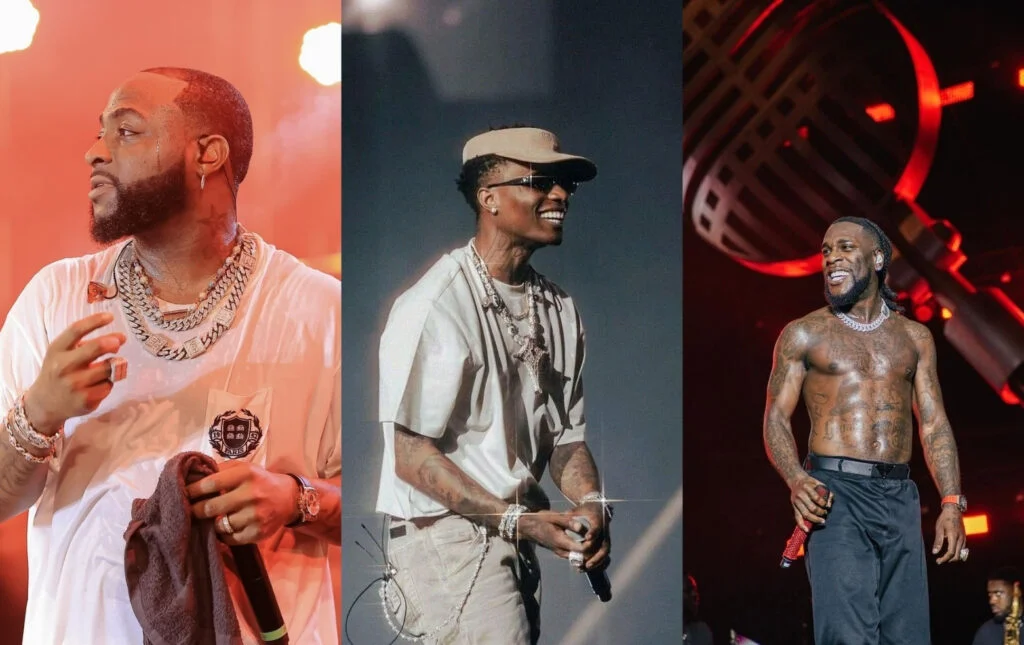
For over a decade, the idea of “The Big 3” in Nigerian music has felt almost untouchable. Three artists. Three global forces. Three gravitational centers around which conversations, comparisons, and fan wars have revolved: Davido, Wizkid, and Burna Boy.
The “Big 3” phrase became cultural shorthand. It shaped debates. It split fanbases into digital armies. For years, penetrating that space felt nearly impossible. But, as Afrobeats continues to globalize and a new generation rises aggressively, the question is no longer rhetorical.
Is there still a Big 3 ?
The Power of Timing
To understand the durability of the Big 3, you have to revisit their timing. They did not emerge into an established global ecosystem; they built within uncertainty. When Nigerian music was still fighting for serious international recognition, they were laying foundations, touring relentlessly, and collaborating strategically.
That timing matters because it positioned them not just as hitmakers, but as pioneers of a movement. When Afrobeats began its global expansion, their names were already embedded in the narrative.
And narratives are hard to displace.

Identity as Strategy
What separates longevity from hype is identity.
Wizkid built mystique and minimalism—a calm dominance. His almost “anti-interview” persona allowed the music to speak louder than commentary.
Davido built accessibility and visibility. High energy. Emotional openness. A relentless presence across social media and global stages.
Burna Boy built ideological positioning. Afro-fusion with purpose. Cultural assertion. Grammy ambition articulated openly and pursued strategically.
Fans did not choose music. They chose identities.
That clarity of positioning made the “battle” sustainable.
The Fan Wars That Built Loyalty
The Big 3 conversation did something powerful: it created narrative tension. Comparisons were constant—album sales, streaming numbers, international tours, awards, headlining slots, Billboard placements, and Grammys. Every move felt competitive, even when unspoken.
And fans stayed glued because rivalry sustains engagement. It keeps timelines alive. It forces innovation. It prevents complacency. The battle was never officially declared, but it became one of the most effective marketing engines in Nigerian music history.
Competition sharpened them.

Reinvention Without Collapse
Longevity in music requires recalibration.
Each of them have faced moments where the industry shifted sonically, culturally, and digitally. The streaming era changed release strategies; global expansion changed production styles; younger artists introduced new sounds at high speed.
Yet, none of them disappeared.
They adjusted. They collaborated across generations. They refined their sound without abandoning their core. They scaled touring infrastructure and leveraged global partnerships.
Reinvention did not mean identity erasure, and that balance is rare.
The Pressure of the Next Wave
But here is where the question becomes urgent.
The current Nigerian music landscape is deeper than it has ever been. New artists are charting internationally faster, social media accelerates visibility, and global audiences are less dependent on legacy names to discover African sounds.
The gate is no longer narrow.
So, is the Big 3 still structurally intact? Or has it become symbolic—more about legacy than current dominance? Dominance today looks different; it is measured not only by streams but by cultural centrality.
And centrality shifts.

Legacy vs Current Relevance
It is possible for the Big 3 to remain historically untouchable while facing stronger contemporary competition.
That is not decline; it is evolution.
Their role may no longer be to compete with each other; it may now be to anchor the genre’s global legitimacy while a new class expands its sonic frontiers.
The hierarchy is no longer simple, but relevance is still visible. They continue to headline, sell out arenas, and drive conversation.
That is sustained power.
So, Is There Still a Big 3?
Perhaps the better question is this:
Has the Big 3 shifted from a competitive race to a cultural institution?
What Davido, Wizkid, and Burna Boy built was not just rivalry; it was structure. They helped normalize global ambition for Nigerian artists. They made Grammy conversations routine and stadium tours expected. They expanded the ceiling.
Whether the industry chooses to redefine the hierarchy or not, one truth remains: penetrating that space requires more than talent.
It required timing, identity, rivalry, reinvention, and scale.
The Big 3 may evolve, stretch, and face new challengers, but its impact is permanent.
And that permanence is what makes the question worth asking.
Paul Ukonu
Author