


Nollywood is often described as expansive, an industry with hundreds of films, multiple regions, and a wide spectrum of stories. But commercially, it is more structured than it appears.
At the center of that structure are four dominant languages: English, Igbo, Yoruba, and Hausa. These are not just cultural vehicles; they are economic frameworks. Films within these pipelines benefit from established audience behavior, predictable distribution, and market confidence that reduces uncertainty for producers and distributors.
Over time, this has created a quiet hierarchy. Projects within these ecosystems are easier to finance, distribute, and scale. Projects outside of them are harder to justify.
This is the context in which Osamede exists.
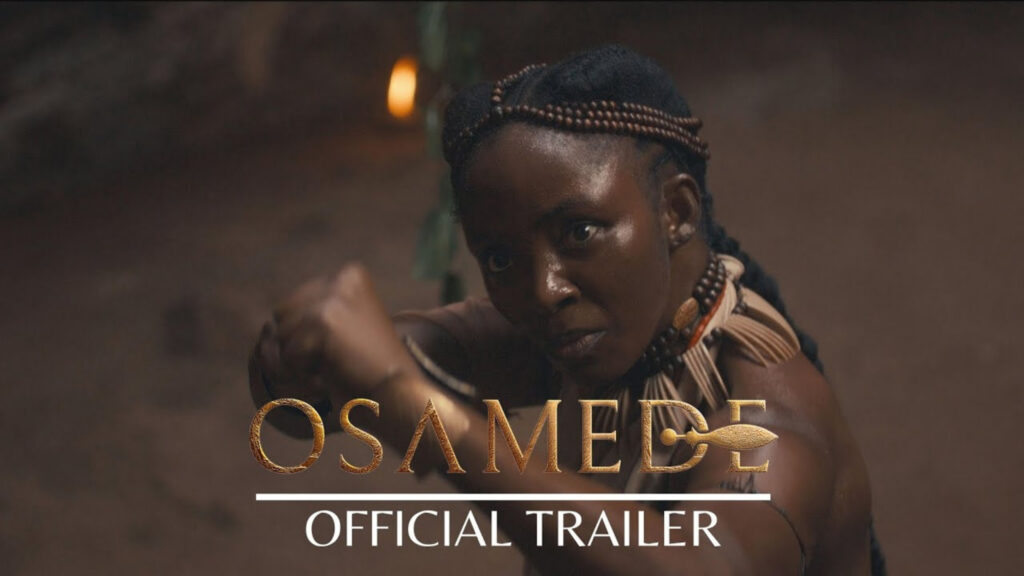
An Edo-language epic operates without the structural advantages Nollywood typically depends on. There is no reliable data set, no proven commercial template, and no guarantee that audiences beyond its immediate linguistic base will engage at scale.
And yet, the film has secured three major nominations at the 2026 AMVCA.
That outcome is disruptive.
The Economics of Language in Nollywood
To understand why Osamede matters, it’s important to be precise about the role language plays in the industry.
A Yoruba or Igbo film carries built-in regional loyalty and decades of audience conditioning. An English or Pidgin film benefits from cross-regional accessibility and diaspora reach, making it attractive for streaming platforms.
These advantages influence funding, marketing, and even creative direction. Language, in many cases, becomes a proxy for risk.
An Edo-language film offers none of these assurances. It enters the market without a clear model for success or strong data on how it travels beyond its core audience.

A Different Creative Strategy
What makes Osamede effective is that it does not attempt to compensate for this lack of structural support by diluting its identity.
The film treats its language as a foundation.
By fully committing to Edo and embedding the story within the historical context of the Benin Kingdom, it achieves a level of cohesion often lost in projects trying to balance authenticity with accessibility. The dialogue feels internally consistent, the performances are anchored in cultural specificity, and the world operates on its own terms.
Many films that draw from indigenous cultures tend to over-translate, softening dialogue or simplifying context to make the material more digestible. In doing so, they lose the texture that makes them distinctive.
Osamede takes the opposite approach. It prioritizes internal integrity, creating a viewing experience that feels immersive rather than adjusted.
Reframing History as Cinematic Material
Beyond language, the film makes a more deliberate move in how it approaches history.
African historical narratives in Nollywood have often been positioned as educational or nostalgic, but not always designed for scale. Osamede shifts that framing.
The Benin Kingdom is used as a source of conflict, mythology, and narrative propulsion. The film leans into spectacle, character stakes, and world-building, positioning its setting as a foundation for cinematic expansion.
This aligns more closely with how global industries treat their histories, not as archives, but as intellectual property.
Because once history becomes material, it becomes scalable.
Recognition Without Qualification
The film’s three AMVCA nominations for Best Director, Best Music Score, and Best Editing matter because of what they recognize.
These are technical categories. They reward execution.
Osamede is not being acknowledged as an indigenous outlier. It is being evaluated within the same framework as mainstream productions and holding its own.

What This Means for Nollywood
If Nollywood continues to concentrate its commercial energy within a narrow set of languages, it risks limiting its evolution.
New audiences are built through expansion.
Osamede introduces new variables, language, context, and storytelling possibilities. More importantly, it tests whether long-standing assumptions about language and scale are constraints, or simply habits.
If an Edo epic film can achieve this level of recognition, then the question is no longer whether such projects are viable.
It is whether the industry has been underestimating them all along.