


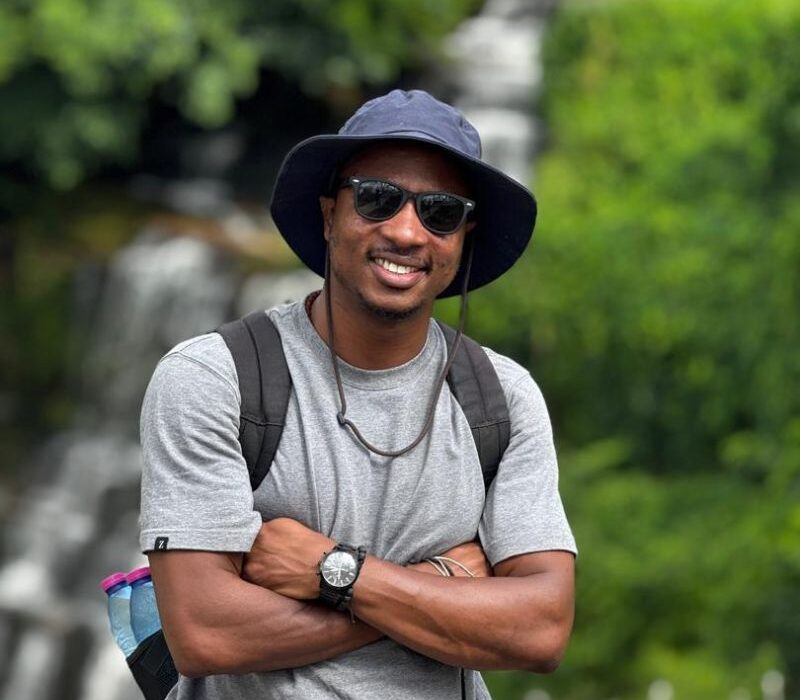
For someone whose work now moves across music videos, visual campaigns, digital experimentation and concept-driven storytelling, Henry Akrong speaks about art with very little mythology. There is no dramatic story of early certainty, no carefully packaged narrative about always knowing exactly who he wanted to become. If anything, he describes his creative life as something that was always present, but not always fully acknowledged.
He traces it back to childhood, to a classroom moment he still remembers clearly.
“I think I discovered my artistic talent when I was about seven,” he says. “The first thing I drew that I still remember was a cell membrane in science class. I drew exactly what was in the textbook, and I realised I could kind of photocopy whatever I saw.”
That ability was noticed early. Teachers noticed it, encouraged it, and eventually involved his parents enough that extra lessons followed outside regular class hours. By then, painting had already become something he could do well enough to attract attention.
Yet talent, for him, did not immediately become direction.
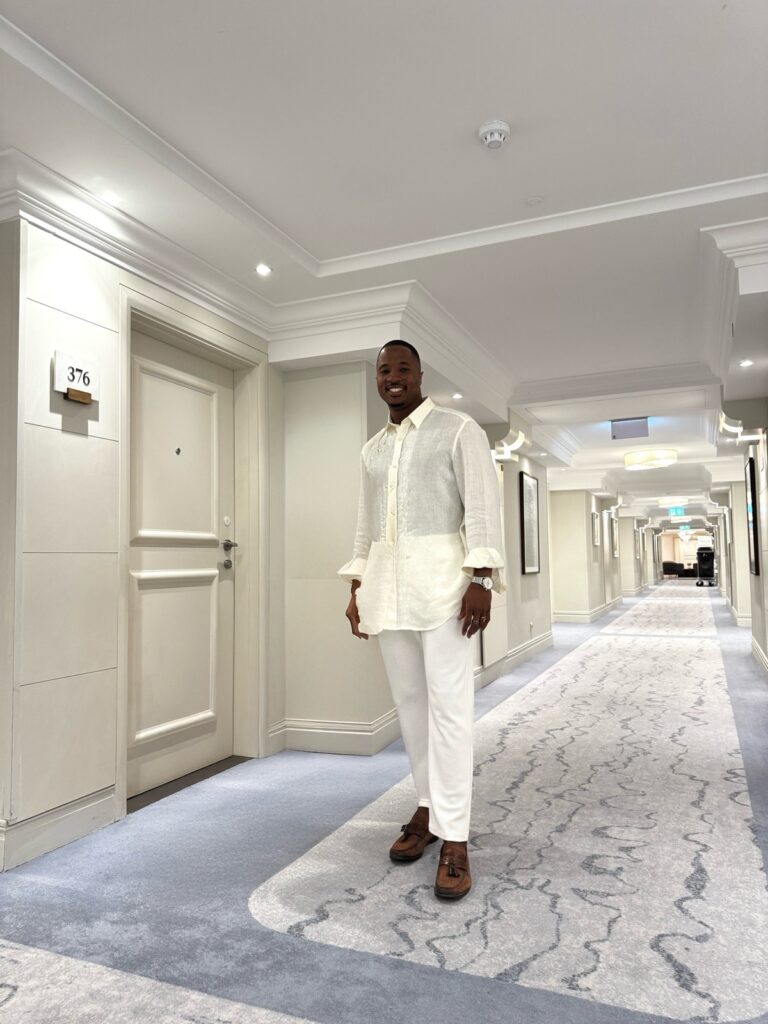
What stands out when he talks about those years is how casually he held something others around him already considered special.
“I was good at it, but because I was good at it, I never really took it seriously,” he says.
Even while receiving awards for his work in school, his mind was often elsewhere not on art as destiny, but on business, money, movement, possibility.
“I was always interested in making money. If it’s not money, I’m not discussing it.” He says with amusement.
That blunt honesty explains a lot about the route his life eventually took. Long before his current work gained wider visibility, entrepreneurship had already become part of his instinct. Selling, testing ideas, building ventures ; he speaks about it almost as naturally as he speaks about painting.
“Ever since I was a young boy, I’ve always been selling, selling, selling. That’s all I’ve been doing. I find what you need, I sell it to you, make some money off it.”
That instinct pushed him into multiple ventures over the years, many far removed from what people now associate with his creative identity. After university, rather than settle into conventional expectations, he invested in a camera and began experimenting visually online. The response came quickly. People paid attention.
He began creating more, building an audience without fully understanding yet that this could become a long-term direction.
Then came another turn; managing RJZ (real name, Joshua Manyanan Essuman-Mensah) the artiste, handling visuals and branding around music, and working closely enough inside the creative industry to understand how image shapes perception. When that chapter shifted, he moved again this time toward business, taking on a marketing role in a betting company and later building his own venture, Bamboos Adventure Park, a recreational space built around outdoor activities and team experiences.
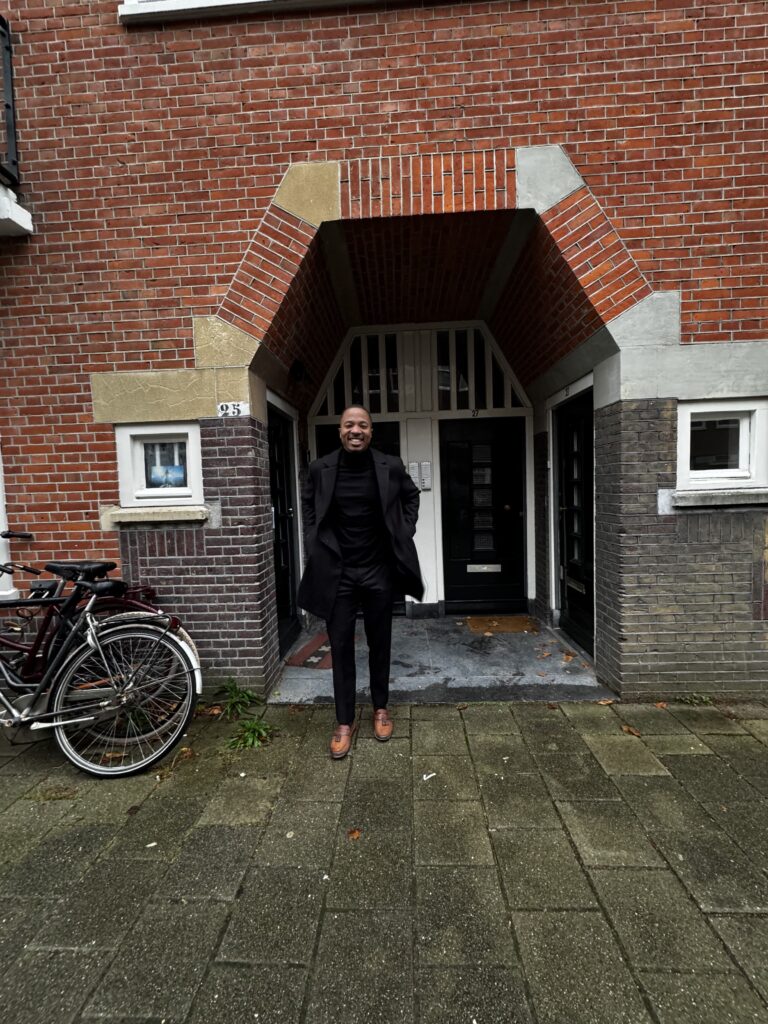
It was successful enough to demand his full attention. But even in that period, he says something remained unsettled.
“I could do everything, come home, make money, but I just wasn’t feeling fulfilled.”
That sense of absence became clearer only when circumstances eventually gave him room to return to art.
When his business model changed and daily operations became less physically demanding, creative work resurfaced almost immediately. Around the same period, he was contacted by the team around Kojo Black, who saw enough in his visual instincts to bring him into their work.
That reconnection, he says, did not feel like starting over. It felt like recovering something.
“It was like a part of me reigniting,” he says. “I knew very well that when I was off track, there was a part of me that was missing.”
That phrase explains much of how he now understands his work. Not as a career shift, but as a return to something fundamental.
“My journey was not a straight line; it was a long, winding path back to my first love.”
That first love now moves through different forms: film, concept development, music visuals, digital image-making, but what he believes connects everything is simple.
“Storytelling,” he says. “That’s what cuts across.”
He says it without trying to turn it into branding. In fact, one of the strongest things about the way he describes his work is his refusal to trap himself inside a single style.
“I wouldn’t put myself in a box. Tomorrow I can paint with crayons. Tomorrow I’ll paint with oil. Tomorrow I’ll paint with acrylic.”
That refusal extends into film too. He sees experimentation not as a phase, but as necessary discipline.
“It’s about not limiting yourself in a box. I think every creative should try everything.”
That openness partly explains why he has embraced tools many artists still approach with hesitation, especially artificial intelligence.
Unlike creators who speak about AI cautiously, he speaks about it with direct conviction.
“I use AI every day,” he says.
For him, the resistance many artists show comes largely from fear rather than understanding.
“What’s happening is a global shift,” he explains. “People are receiving it from a place of fear.”
He places the current moment inside a longer history of technological disruption, comparing it to earlier industrial transitions where machines changed labour patterns permanently.
His argument is simple: AI should not be understood first as replacement, but as extension.
“AI doesn’t replace you, it rather joins your team.”
That belief is practical, not theoretical. He points to the scale of work he can now execute alone.
“Back then it would take me about twenty to twenty-five people to work on a very large animation project. Today it’s just one person doing it by myself.”
For him, that matters not only for efficiency, but for African ownership.
Because while global AI systems continue to expand, he is sharply aware that most are still built on data that rarely reflects African realities accurately.
“If I create an African seller using AI, it usually looks like the typical African stereotype outsiders imagine.”
What interests him is what happens when African creatives begin training systems using their own cultural references.
“When we train models on African data, we now have the upper hand.”
That idea of ownership appears repeatedly in how he thinks about tools, storytelling and visual direction.
Even in projects that audiences may read as purely aesthetic, he insists that the hidden work is always in the details.
“The little crumbs in there. Nobody sees them.”
That is one reason he often shares behind-the-scenes material after releases not simply to document production, but because he knows viewers rarely understand how much intentional thought sits beneath a finished image.
“When people see the BTS, they realise how it was done.”
And sometimes, he says, someone notices exactly what he hoped would not go unseen.
“There’s always at least one or two people who decode it.”
That recognition matters deeply to him, not because it flatters, but because it confirms that care was visible.
He compares it to food.
“It’s like a chef whose food has been tasted and someone says, ‘Oh, you added this or that.’ You appreciate it.”
That same attention to detail also shapes how he works with teams. If there is one part of his entrepreneurial history that clearly informs his creative process, it is how he manages people.
He speaks often about comfort, trust, and energy on set.
“I like to make sure everybody is comfortable enough to put their best foot forward.”
The language is simple, but it reveals something important: his work is not only built around ideas, but around assembling people who can believe in those ideas enough to execute them.
And when things fail, which he accepts as inevitable, his response remains unusually direct.
“I’m a gambler at heart.”
He says experimentation has taught him to become comfortable with uncertainty.
“You hit rock bottom, then you come back up.”
For him, fear is what truly blocks creativity.
“Fear is the opposite of creativity. Creativity is curiosity.”
That curiosity now drives both commissioned work and personal projects, though he draws a clear line between the two.
Client work may satisfy business realities. Personal work remains where instinct leads.
“If it’s my project, I’m doing it with my vision.”
And perhaps that balance explains why his work still carries the feeling of someone not trying to prove style, but simply following what still feels alive.
Because even after business, money, ventures, management, and years spent away from art, the thing he returned to most fully was still the thing that had stayed with him longest.
Not because it guaranteed profit, but because it restored something he now understands more clearly than before, fulfilment.