


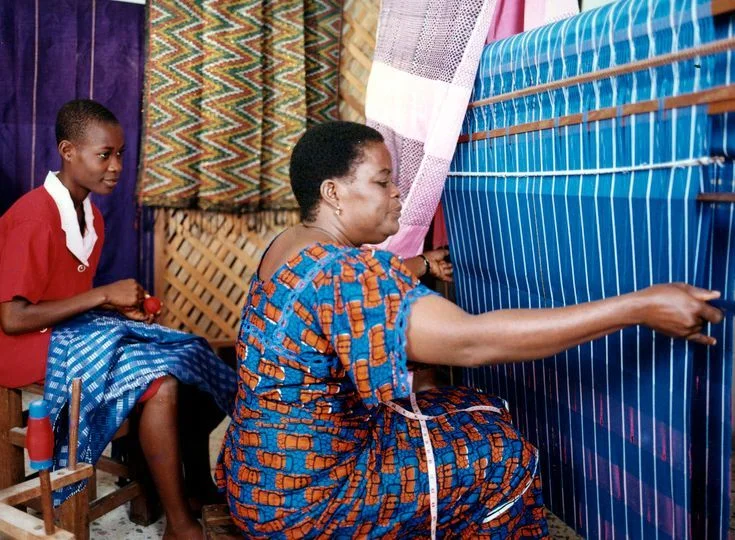
For decades, we have introduced Akwete fabric as a beautiful indigenous textile from Akwete in Abia State. We describe the patterns. We mention the upright loom. We celebrate the women who weave it. Then we stopped there.
You see, that right there is the problem.
We have been telling the story of Akwete as nostalgia, as heritage, as craft but we have completely forgotten the power and strategy.
And until we correct that narrative, Akwete will remain admired but undervalued.
The “Cultural Artefact” Trap
When African products are framed primarily as “traditional,” they are subtly removed from conversations about industry, export, technology, and global competitiveness.
Akwete is often positioned as; a ceremonial cloth, a cultural symbol, a beautiful handwoven fabric and a relic of the past.
All of those are true. But they are incomplete.
The world’s most powerful textile economies, the Japanese selvedge denim, the Italian silk, are not marketed as sentimental traditions. They are positioned as technical excellence, protected intellectual property, and national assets.
We have been telling Akwete’s story like folklore. It should be told like infrastructure. I hope you understand.
Akwete Is a System
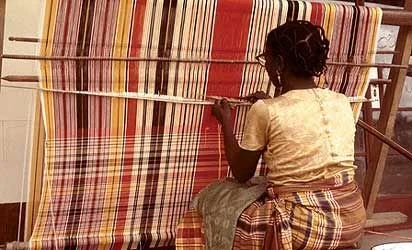
For over a century, Akwete’s weaving tradition has operated as a decentralized production ecosystem. It has, specialized technical knowledge, a distinct loom architecture, recognizable design language, intergenerational apprenticeship and a geographic origin credibility
In contemporary economic terms, that is an industrial cluster.
The women who weave Akwete are not merely artisans. They are custodians of proprietary manufacturing knowledge. The upright loom is a technical differentiator. The motifs are not simply decorative, they are visual codes with historical authority.
When we reduce Akwete to aesthetics, we ignore its architecture.
The Global Fashion Industry Is Looking, But Not Waiting
The global fashion economy is undergoing a shift. Consumers now demand, traceability, authentic origin stories, ethical production and cultural depth
Akwete satisfies all four.
Yet without strategic positioning global brands will continue to draw inspiration without formal partnership, without licensing, and without reinvesting in the source community.
The issue is not visibility, it is control.
If Akwete remains unprotected and loosely structured it risks becoming a reference point rather than a revenue engine.
We Have Been Telling the Wrong Story
We told the story of beauty. We should have told the story of leverage.
We told the story of culture. We should have told the story of capital.
We told the story of the past. We should be telling the story of the future.
Akwete does not need sympathy. It needs structure.
What a Correct Story Sounds Like
The correct story does not erase tradition, instead it will elevate it.
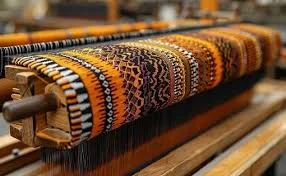
It acknowledges that Akwete emerged from experimentation, including the adaptation of imported threads in the nineteenth century. Innovation has always been part of its DNA. It recognizes that men constructed the looms while women engineered the fabric, a collaborative system that sustained a local economy long before “creative industry” became policy language.
Most importantly it positions Akwete as future-facing.
The question is not how to preserve it in museums the question should be how to digitally archive its patterns, register its intellectual property, formalize apprenticeship programs, integrate it into contemporary fashion supply chains, establish export standards and build global brand recognition
That is simply strategy.