

Introduction
There are some plays you watch and then there are plays that watch you back.
In a city like Lagos, loud, electric, restless, where entertainment is everywhere and attention spans are short, theatre still has the rare ability to stop a room cold. To force strangers to sit together in silence and confront truths that society would rather whisper about.
For Tosin Adeyemi, theatre is healing. And “tHERapy” is exactly that.
A multidisciplinary storyteller
Tosin Adeyemi does not describe herself with a single title.
Actor. Director. Producer. Storyteller.
Born with roots in Edo State, Tosin studied Creative Arts at the University of Lagos before continuing her training at La CinéFabrique film school in Lyon, France.
Her work now spans multiple formats including film, television, theatre, and digital media.
“I identify as a multidisciplinary artist,” she says. “I enjoy bringing stories to life regardless of the platform.”
But theatre remains closest to her.

Early Beginnings in Performance
Adeyemi’s journey into performance began before university.
At eight years old, she was already singing in the church choir and performing in church productions. Rehearsals became part of her childhood routine.
As a teenager she became fascinated with the Nigerian television series Super Story, even telling her mother she hoped to appear on the show one day.
By the time she reached university, the direction was clear.
“By the time I was seventeen, I had already spent a decade in rehearsals,” she says. “Theatre wasn’t just a career choice. It was something I had already been living.”
The play: “tHERapy”
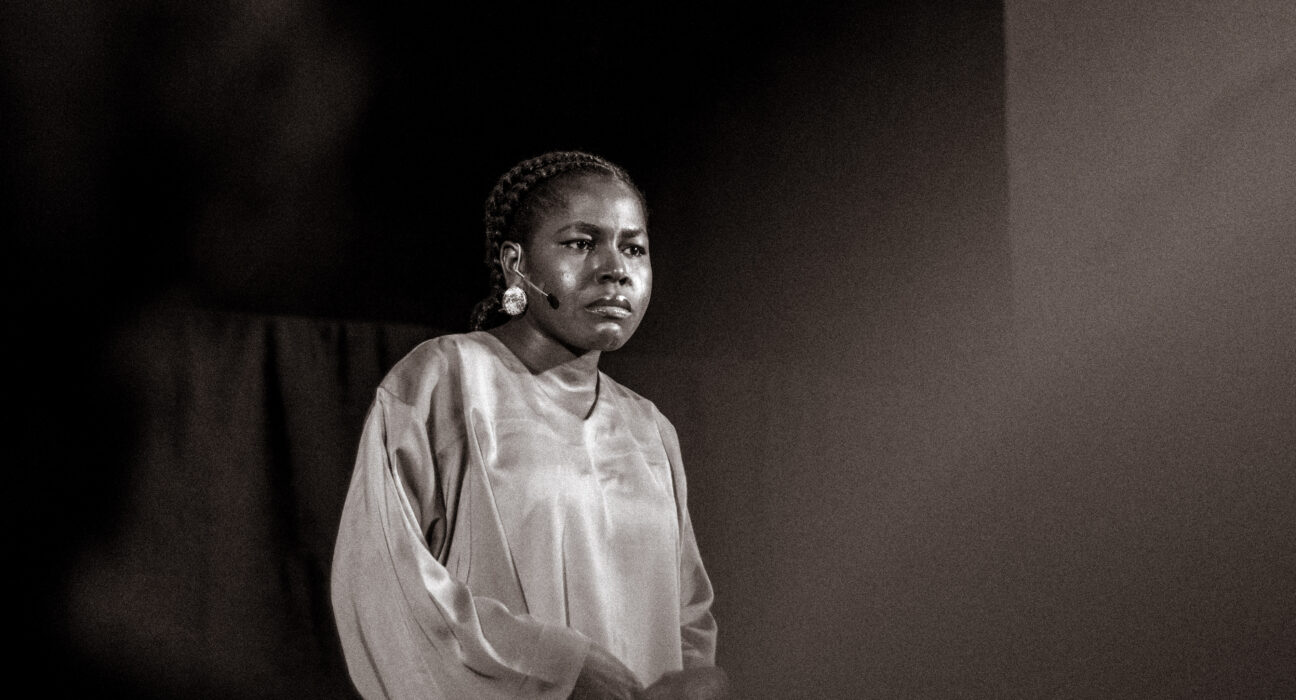
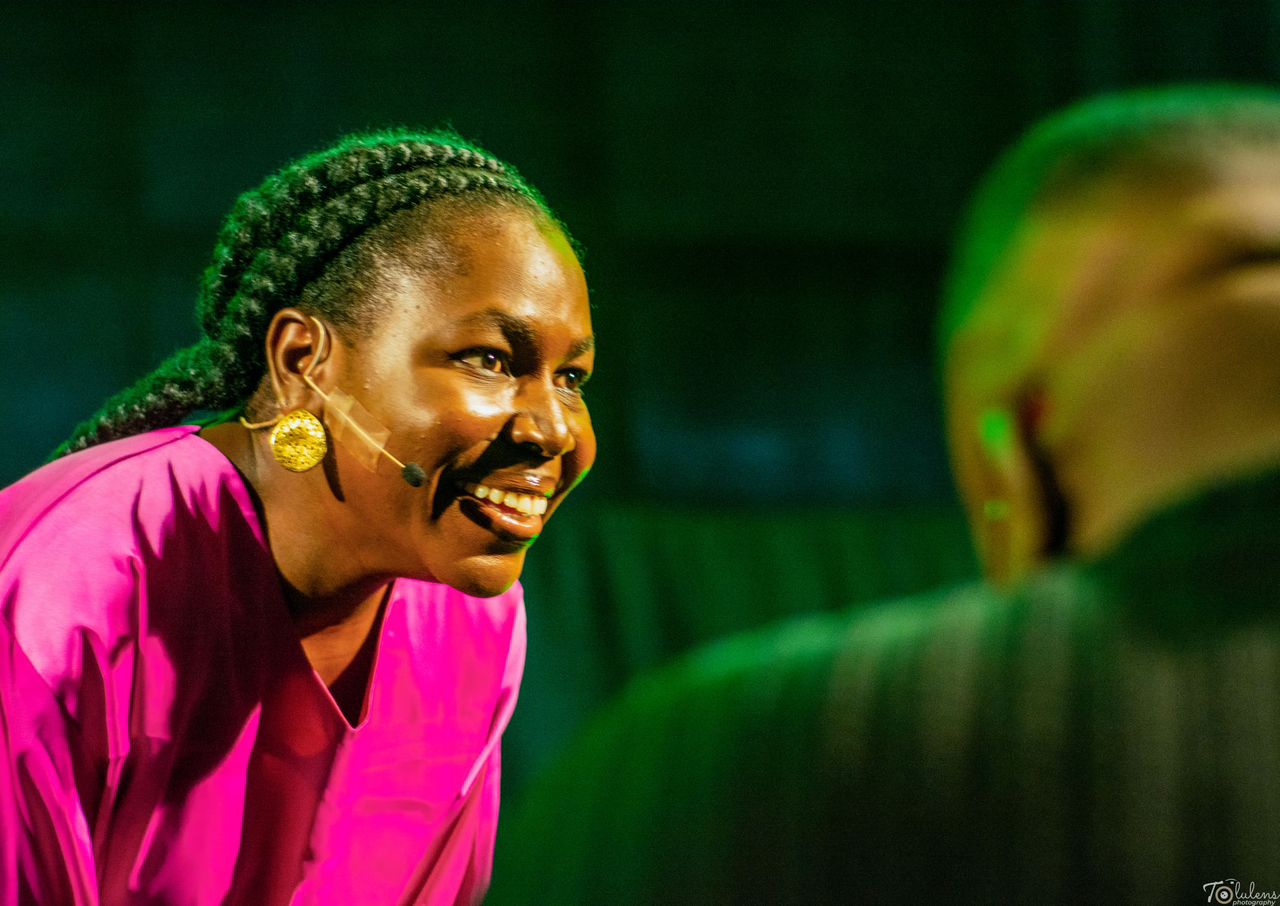
Tosin’s latest project, Therapy, is a one-woman play written and performed by Oladotun Olagbadebo, with Adeyemi as Director.
The play unfolds as a 60-minute exploration of womanhood, addressing themes such as:
- societal expectations
- family relationships
- sexual assault and abuse
- childhood trauma
- healing and identity
“It’s a deep dive into the realities women face,” Tosin explains. “And although it’s set in Nigeria, the themes are universal.”
The simplicity of the production is deliberate: one performer carrying an entire story.
When the audience responds
One of the most striking moments in the play is the reaction from the audience when asked directly:
“How many of you here have been groped?”
“How many of you have had your buttocks tapped?”
Often, many hands go up.
In that moment, the boundary between performance and reality disappears.
“People cry. They shout in solidarity,” she says. “They are not just watching the story. They are recognizing themselves in it.”
The play itself grew out of Oladotun’s personal experience and began as a form of healing.

The challenges of producing theatre in Nigeria
Despite its growing audience response, the production faces familiar challenges.
Funding.
Unlike theatre industries in countries such as the United States or the United Kingdom, Nigeria offers limited institutional support for stage productions.
According to Tosin, tHERapy is entirely self-funded.
Ticket sales remain the primary source of revenue, making the financial model risky.
“This is why many creatives struggle financially,” she says.
While Nigerian music and fashion continue to gain global recognition, theatre remains underfunded and often overlooked.
Even physical theatre venues in Nigeria are limited.
Why theatre still matters
Despite these challenges, Adeyemi remains committed to the stage.
For her, theatre is part of a longer cultural tradition of storytelling.
She recalls growing up watching Tales by Moonlight, the popular television program that introduced children to Nigerian folklore.
“Storytelling is fundamental to who we are,” She says
In many ways, theatre continues that tradition in live form.
The Next Performance
Produced by B-Rated Productions, the company co-founded by Tosin, tHERapy will be staged again on March 15, 2026, at the American Guest Quarters in Ikoyi, Lagos,
For Tosin, the goal is not simply to entertain an audience but to create a space where difficult conversations can happen.
For sixty minutes, the lights dim, the story unfolds, and the audience becomes part of something larger than a performance.
Sometimes, they leave with something unexpected.
A sense of recognition.
And occasionally, healing.